
Introduction & Defining the Problem
Are you searching for a modern solution to the redness and inflammation of your skin? LED light therapy for rosacea is emerging as a powerful, science-backed answer to this challenging condition. For millions, rosacea is more than a surface-level issue; it is a constant battle with self-confidence that impacts daily life. While traditional creams and medications can be underwhelming, this guide explores how non-invasive light technology offers new hope.
This article will serve as your ultimate guide. We will explore everything from the core science to its practical applications. Whether you are an individual seeking an at-home solution or a professional institution aiming to provide superior services, you will find credible, actionable answers right here.
The Science Deep-Dive: Why is LED Light Therapy Effective for Rosacea?
To understand the power of LED therapy, we must first grasp a core concept: photobiomodulation.
Imagine your skin cells are like tiny, rechargeable batteries. When afflicted by inflammation from rosacea, these “batteries” become drained. Consequently, they function poorly and struggle with self-repair. LED therapy, however, acts like a smart charger. Its specific wavelengths of light are absorbed by the “power plants” deep within skin cells—the mitochondria. This process stimulates the mitochondria to produce more energy (ATP). As a result, it “awakens” tired cells, empowering them to accelerate repair, reduce inflammation, and restore the skin’s healthy state.
For professionals, the mechanism is more precise. The process begins when photons of specific wavelengths are absorbed by an enzyme called Cytochrome C Oxidase. Following this, a cascade of complex cellular signaling is triggered. This includes upregulating anti-inflammatory cytokines and downregulating pro-inflammatory ones. In short, LED therapy isn’t just a surface-level treatment; it directly intervenes in the inflammatory pathways that perpetuate rosacea.
In the spectrum of light, two “hero” wavelengths are particularly outstanding: Red Light (~633nm) and Near-Infrared Light (~830nm). Clinical studies show that combining these wavelengths is both safe and effective for skin rejuvenation by reducing inflammation.
The Dual Value: At-Home and Professional Applications of LED Therapy
A. For the Individual User : “Take Control of Your Skin’s Future, Starting at Home”

For a rosacea patient, a high-quality at-home device means taking back control.
- Unmatched Convenience and Privacy: No more scheduling appointments or traveling to a clinic. You can enjoy a gentle 10-20 minute light session from the comfort of your own home. The entire process is private and transforms skincare into a relaxing ritual.
- Excellent Long-Term Cost-Effectiveness: An at-home device is a wise long-term investment. While there is an initial cost, it is often much lower than the cumulative fees of ongoing professional treatments. A one-time purchase provides countless treatments on your own schedule.
- Achieving True, Continuous Management: Rosacea is chronic, so consistent intervention is key. At-home devices are perfect for this philosophy. They enable you to treat your skin frequently, which helps keep inflammation in check and prevent flare-ups.
If you are looking to invest, understanding the features of the best home red light therapy devices is the next crucial step.
B. For the Professional Institution : “Empower Your Business, Elevate Client Value”
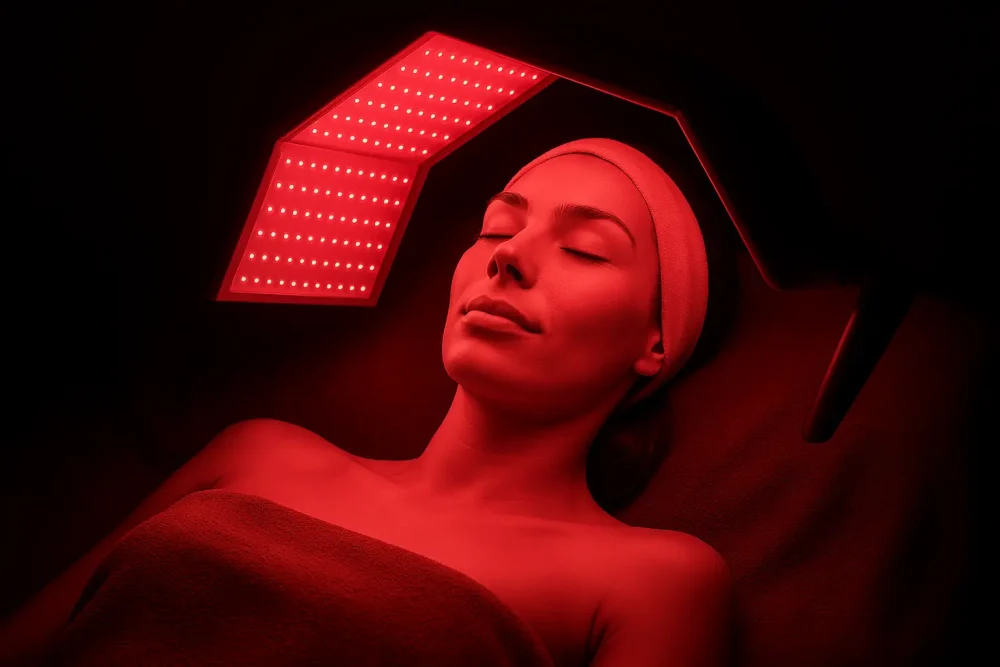
For dermatology clinics or spas, introducing a professional LED device is a strategic move.
- Expand Your Service Menu: LED therapy is a high-demand, non-invasive technology. By offering it, you can attract new clients, especially those with sensitive or problematic skin.
- Enhance Existing Treatment Outcomes: LED therapy is also the perfect “add-on” service. Using it after treatments like chemical peels or microneedling can significantly reduce redness and accelerate healing.
- Increase Client Retention and Spend: You can bundle LED therapy into premium packages. Additionally, offering it as a member service can incentivize clients to purchase treatment courses.
- Establish a Professional Moat: Investing in a certified, professional-grade device differentiates your business. It shows a powerful commitment to science and professionalism.
This strategy allows you to offer diverse professional red and NIR light therapy solutions. For those inspired to begin, a clear plan for starting a red light therapy business can provide a blueprint for success.
The Business Case: A Quick ROI Analysis
For business owners, numbers speak loudest. Let’s quantify the value. For instance, imagine you introduce LED therapy as a 15-minute add-on service priced at $50.
- If just four clients opt for this add-on per day, that’s an additional $200 in daily revenue.
- In a month with 22 working days, this translates to $4,400 in new, high-margin revenue.
- Based on this simple calculation, the investment in a professional device can often be fully recouped in just 1-2 months.
The Practical Guide: How to Choose and Use an LED Device
Whether for yourself or your clients, understanding how to choose professional devices based on science is vital.
Core Selection Criteria:
- Authoritative Certification and Safety: First, ensure the device has FDA clearance or a CE mark. This signifies rigorous third-party review for safety.
- Key Technical Parameters:
- Wavelengths: Next, confirm the device includes the clinically-proven wavelengths of Red (~633nm) and Near-Infrared (~830nm).
- Power Density/Irradiance: This is a critical technical specification. A deeper dive into red light therapy wattage can help you make an informed choice.
- Form Factor: Finally, consider the device type. The market offers flexible masks, handheld wands, and large panels.
Usage Protocol and Expectation Management:
- Pre-Treatment: Always start with a clean face, free of oil and products.
- During Treatment: Follow the manufacturer’s instructions, typically 3-5 sessions per week for 10-20 minutes each.
- Post-Treatment: After a session, apply gentle, hydrating products.
- Be Consistent! Remember that LED therapy effects are cumulative. Commit to regular use for at least 4-8 weeks to see noticeable results.
Pro-Tips: How to Maximize Your LED Therapy Results
Owning a device is the first step. However, using it strategically is the key to unlocking its full potential.
- The Golden Pairings (Post-Treatment): After an LED session, your skin is primed for absorption. Learning about the best serums to use with red light therapy can significantly amplify your results. For example, apply products with Hyaluronic Acid, Ceramides, or Niacinamide.
- What to Avoid (Before Treatment): To prevent irritation, do not apply potent active ingredients immediately before a session. This includes Retinoids, Vitamin C, and exfoliating acids.
- Consistency and Timing: Adhering to a consistent schedule is paramount. For detailed guidance, professionals can learn how often clients should do red light therapy. Some users also wonder about the best time of day for treatment.
- Adopt a Holistic Approach: Lastly, complement your sessions with daily sunscreen, a gentle cleanser, and a balanced diet.

Frequently Asked Questions (FAQ)
We’ve compiled answers to the most common questions to help you proceed with confidence.
- Q1: Is LED light therapy truly safe? Are there any side effects?
A: Yes, LED therapy cleared by regulatory bodies is exceptionally safe. The light is non-invasive and contains no harmful UV rays. Side effects are therefore extremely rare. For professionals, ensuring client safety with appropriate eye protection is also a best practice. - Q2: How long will it take to see results?
A: The results are cumulative. Most users see noticeable improvements after 4 to 8 weeks of regular use. Optimal results, in general, are seen around the 12-week mark. - Q3: Who should not use LED light therapy (Contraindications)?
A: While safe for most, it’s vital to know the full list of contraindications. You should consult a doctor before use if you are pregnant, have epilepsy, or take photosensitizing medications. - Q4: Will LED therapy make my skin more sensitive to the sun?
A: No. Medical-grade LED devices do not emit UV radiation. For this reason, they will not increase your skin’s sensitivity to the sun. - Q5: Can I use my device every single day?
A: It’s best to follow the recommended usage guidelines, which are typically 3-5 times per week. In this case, consistency at the recommended frequency is key.
Conclusion and Call to Action
LED light therapy is no longer a futuristic concept. Instead, it has evolved into an accessible and scientifically-validated gold standard for managing rosacea. This technology uses a gentle, non-invasive approach to regulate inflammation from its source. Ultimately, it brings lasting calm and health to the skin.
This innovation empowers individual sufferers. It gives them the ability to manage their condition conveniently at home, restoring their confidence. Moreover, it provides a powerful engine for professional institutions seeking excellence. They can upgrade services, enhance client satisfaction, and achieve sustainable business growth.
The power of light is here, waiting for you to harness it.
- For You, Seeking a Personal Solution: Ready to begin your journey to calmer skin? Explore our collection of clinically-proven, at-home LED therapy devices now and find the perfect solution for your needs.
- For You, Seeking a Professional Upgrade: Wish to elevate your business to a new level of professionalism?Contact our business solutions team today to receive technical specifications, wholesale policies, and customized advice on integrating LED therapy into your services.


